Newborn skin is not simply small adult skin[cite: 11]. The stratum corneum — the outermost skin barrier layer — is thinner in newborns, more permeable to chemicals in contact with it, and produces a less acidic surface pH[cite: 11]. These physiological differences mean that detergent residues left in clothing and bedding pose a meaningfully greater risk to newborn skin than to adult skin[cite: 11]. This guide explains why the standard adult eczema criteria apply to newborn laundry with extra urgency, and which products available in Ireland meet them[cite: 11].
Why Newborn Skin Needs a Different Standard
Research published in the British Journal of Dermatology (Stamatas et al.) has established that newborn skin has increased transepidermal water loss (TEWL), reduced barrier function relative to adult skin, and a less acidic surface pH — factors that persist for the first several months of life[cite: 11]. This increased permeability means that fragrance residues and optical brighteners in constant contact with newborn skin are absorbed at significantly higher rates than they would be through adult skin[cite: 11].
The practical implication: the same fragrance-free, brightener-free standard we recommend for adult eczema skin applies to newborn laundry, but with even less tolerance for exceptions[cite: 11]. A standard detergent with trace preservatives at concentrations the EU Ecolabel considers safe for adult skin may still act as a source of repeat low-dose exposure for a newborn who spends 16+ hours a day in clothing washed with it[cite: 11].
What the Label "Baby" or "Gentle" Means in Practice
Products marketed as "baby" laundry detergents are not regulated to a higher standard than standard adult products in Ireland or the EU[cite: 11]. The "baby" designation is purely a marketing category, not a distinct regulatory classification[cite: 11]. Several popular "baby" laundry products in Irish supermarkets contain synthetic fragrance described as "delicate" or "gentle" — but a fragrance is still a fragrance regardless of how it is positioned in the branding[cite: 11].
The only reliable filter is the ingredient list itself[cite: 11]. Avoid any product for newborn laundry that lists the following substances[cite: 11]:
| Ingredient Group | Examples to Avoid | Why Avoid? |
|---|---|---|
| Fragrance / Parfum | Linalool, Limonene, Geraniol, Citral[cite: 11] | Highly sensitizing allergens; primary trigger for contact dermatitis[cite: 11]. |
| Optical Brighteners | Fluorescent Whitening Agents (FWA)[cite: 11] | Designed to remain in fabrics to reflect light; can cause skin irritation[cite: 11]. |
| Isothiazolinones | Methylisothiazolinone (MIT), Benzisothiazolinone (BIT)[cite: 11] | Potent chemical preservatives known to cause allergic reactions[cite: 11]. |
Our Top Picks for Newborn Laundry in Ireland
1. Earth Breeze Fragrance Free
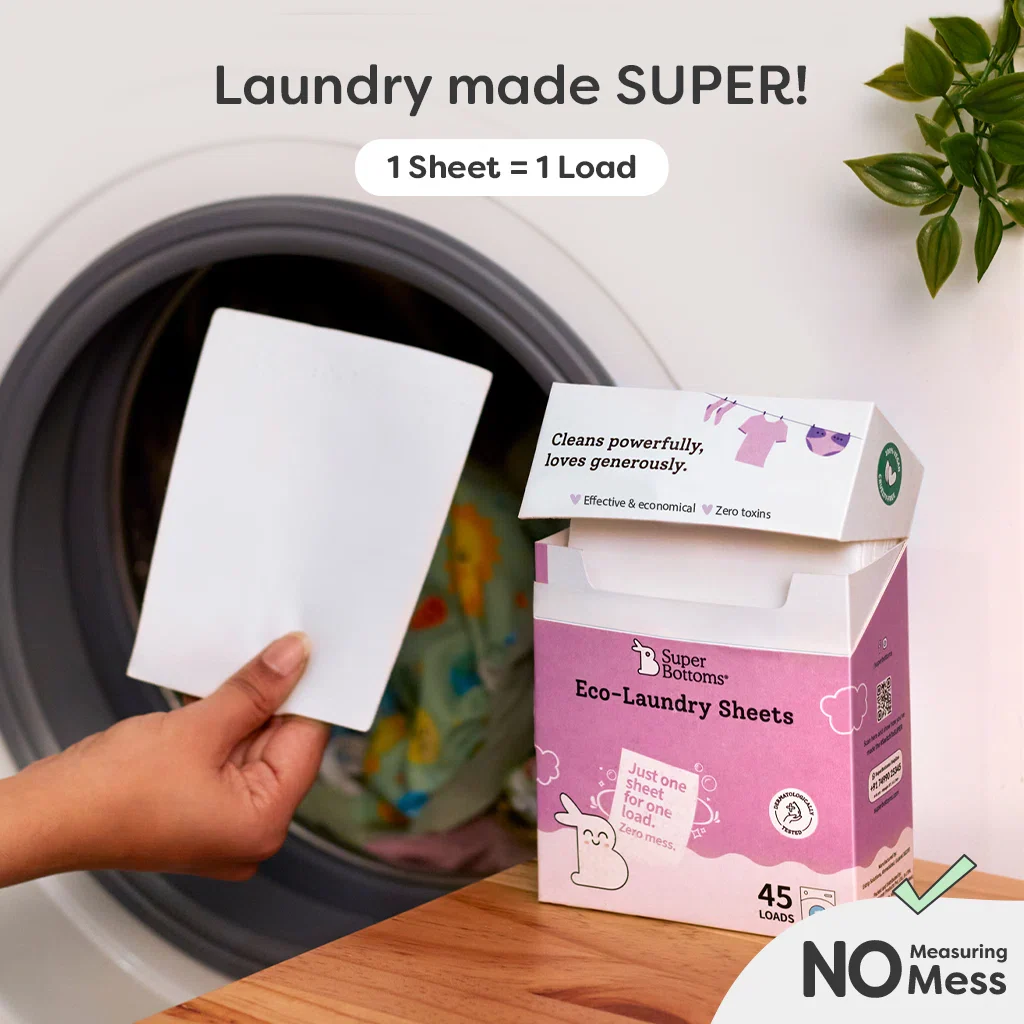
EWG A-rated overall, with absolutely no optical brighteners and no chemical preservatives in the disclosed formulation[cite: 11]. This features the shortest and cleanest ingredient list in the laundry sheets category, making it our primary recommendation for newborn laundry[cite: 11].
2. Bio-D Laundry Liquid (Unscented)
EWG A-rated and Ecocert certified[cite: 11]. It contains no isothiazolinone preservatives and no optical brighteners[cite: 11]. Widely available in Irish health stores nationwide, it is the most accessible unscented liquid format for newborn laundry in Ireland and can easily be used at half-dose for small baby loads[cite: 11].
3. Surcare Washing Liquid
A UK brand available through Amazon IE and select Boots stores in Ireland[cite: 11]. It is dermatologically tested, completely fragrance-free, and brightener-free[cite: 11]. While not explicitly eco-certified, its ingredient profile is completely safe for sensitive skin[cite: 11].
Washing Protocol for Newborn Items
Establish a safe washing routine to protect your baby's delicate skin barrier[cite: 11]:
- Pre-Wash Everything: Wash all new baby clothing, bedding, and muslin cloths before first use[cite: 11]. A single wash at 40°C with your chosen safe detergent is sufficient to strip manufacturing chemical residues, transport dust, and packaging odors[cite: 11].
- Clear Out Residual Detergent: If your washing machine retains residues from heavily fragranced adult detergents, run an empty hot cycle (60°C or higher) to clear out the drum and drawer before laundering baby items[cite: 11].
- Use an Extra Rinse: Most modern machines offer an "extra rinse" setting[cite: 11]. Utilize this for the first three months of your baby's life to ensure no trace detergent is left behind on fabrics[cite: 11].
- Skip Softeners Completely: Do not use commercial fabric softeners[cite: 11]. If needed, use white vinegar in the fabric softener drawer as a safe, residue-free alternative[cite: 11].
- Air Dry Wisely: Dry clothing in fresh air or a tumble dryer[cite: 11]. Avoid drying clothes near synthetic fragranced candles or air fresheners, which can deposit airborne synthetic compounds back onto the fabrics[cite: 11].
Struggling with eczema flare-ups in the family? Read our comprehensive guide on identifying compound triggers and finding the best natural detergents for eczema.
Eczema Laundry Guide →Frequently Asked Questions
The safest detergent is one that is fragrance-free, optical brightener-free, and EWG A-rated[cite: 11]. Our top picks in Ireland are Earth Breeze Fragrance Free (sheets) and Bio-D Laundry Liquid (Unscented)[cite: 11]. Surcare Washing Liquid is also a widely available, reliable alternative[cite: 11].
Not necessarily[cite: 11]. If your household already uses a fragrance-free, brightener-free, EWG A-rated detergent, it is perfectly safe to use for the whole family's laundry[cite: 11]. Switching the entire household to this safe standard is easier and prevents cross-contamination in the washing machine drum[cite: 11].
Washing them once with a safe detergent at 40°C is entirely sufficient[cite: 11]. Pre-washing is simply done to remove manufacturing starch, shipping dust, and packaging scents, rather than to build up a protective coating[cite: 11]. Repeated washes before first use are unnecessary[cite: 11].
Fairy Non-Bio contains synthetic fragrance, meaning it is not fragrance-free despite its "gentle" positioning[cite: 11]. Pediatric dermatologists generally advise avoiding fragranced detergents entirely for newborns[cite: 11]. If you choose standard supermarket formulations like Fairy Sensitive, check the ingredients to ensure no optical brighteners or sensitizing preservatives are present[cite: 11].

Related Guides
Regulatory & Toxicology References
- British Journal of Dermatology: Stamatas et al. research on newborn skin physiology, barrier differences, and transepidermal water loss.
- Environmental Working Group (EWG): Rating framework and hazard criteria assessing ingredient safety profiles in household laundry products.
- EU Cosmetics Regulation Annex III: Reference requirements detailing the mandatory labeling of allergen compounds.